Schuneman keynote Ana Marie Cox addresses importance of new media

Miki Johnson, left, and Jessica Chance, right, participate in the Visual Storytelling panel discusson on Thursday, April 8, in Scripps Hall at Ohio University. The panel was part of the 2010 Schuneman Symposium on Photojournalism and New Media. / Photo by Brad VestRIGHT: Miki Johnson, left, and Jessica Chance, right, participate in the Visual Storytelling panel discusson on Thursday, April 8, at Ohio University. The panel was part of the 2010 Schuneman Symposium on Photojournalism and New Media. / Photo by Brad Vest

By Lindsay Ferguson, lf245706@ohio.edu

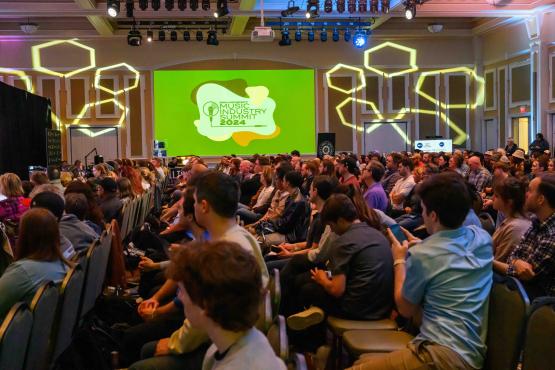
ATHENS, Ohio (April 12, 2010)—Ana Marie Cox, inspired by the theme of the second annual Schuneman Symposium Thursday evening, whipped out her iPhone before beginning her keynote address and snapped a few pictures of the students and professors that filled Baker Center Ballroom. She then encouraged everyone to get out their phones and social media tools because surely “someone is calling you.”

This moment of breaking the ice proved a point that Cox, the founder of www.Wonkette.com, made throughout her speech, as well as the overarching idea of the symposium this year: traditional journalism and journalists must find ways to move along with the increasingly mobile and personal aspects of new media.

“You kind of have to know how to do everything,” Cox said. “No one’s going to hold your hand anymore.”

The second annual symposium, entitled “Convergence, Confluence or Confusion? The Impact of New Media,” was made possible by a gift from alumni R. Smith “Smitty” Schuneman and Patricia W. Schuneman. Cox’s keynote address was preceded earlier in the day by an opening address and three panels of experts. The panel discussions were led by Adam Conner, associate manager for privacy and global public policy for Facebook; Phil Elliott, an Ohio alumnus and the youngest Associate Press White House correspondent in history; and Jose Azel, an internationally acclaimed photojournalist.

Cox discussed her stumble into online journalism after working for a number of print publications and serving as the former editor of suck.com. After founding Wonkette, a political satire blog that Cox described as appealing “to the voice that says, ‘maybe we shouldn’t take ourselves so seriously,’” she realized online journalism was going to be a fixture in her career. The so-called “Mistress of New Media,” who is also the Washington correspondent for GQ Magazine and regularly covers the White House via Twitter, added that her current gig has proved to be more satisfying than any desk job she’s ever had. “It’s a path I don’t think I could recreate,” she said.

Cox’s speech also included a number of professional and life tips that she has picked up along the way. Many of them suggested that being a journalist can be made easier by being humble and respectful of differing opinions and can lead to new opportunities by networking and taking risks.

“It’s OK to have thin skin, but you need to heal quickly,” Cox said. “Some people are not going to like what you do...if you’re not taking hits, then you’re not doing something right.”

Cox did not deny that the rise of social media tools—such as Twitter, YouTube and personal blogs—has widened the concept that anyone can essentially report or make commentary on the news. She described her definition of a journalist as being somewhat broad

“A journalist is someone who goes out into the world, finds out stuff and then comes back and tells us about it. Then you’re committing an act of journalism” Cox said. “But you get to decide the type of journalist you want to be.”

Cox’s relaxed speech and informal dress—jeans, blouse and studded black shoes—furthered the idea that journalism is taking on a more personal tone, allowing each participant to add his or her own voice while still presenting the facts and information to media consumers. The days of journalists stuck behind a desk or at a computer are slowly fading as new modes of reaching the public become popular. The idea that journalist are now curators that collect massive amounts of information, Cox said, is becoming more obvious.

“I came into journalism wanting to be a newsprint journalist where I write wearing a fedora and smoking cigars, and haphazardly write stories that stand up for humanity and make peoples lives better and all of that idealistic stuff,” said Caitlin McGlade, a junior studying news editing. She attended all of the symposium presentations. “I knew that Internet journalism was on the rise and that newspapers were dying, but I didn’t really think a lot about all this extra stuff that I’d have to learn. Today reinforced that.”

McGlade is certainly not alone in her realization, as more students have grown accustomed to learning new ways of approaching their passion as journalists. Cox’s speech, as well as the other panel discussions, emphasized this notion of learning new ways of storytelling, whether it be tweeting or shooting and editing your own video.

“This time around, it really got us thinking about different kinds of communication on the receiver and how the transmitter has to behave,” Mr. Schuneman said of the symposium. “I think it was an excellent conference and we look forward to coming back next year.”

For more information on the 2010 Schuneman Symposium, visit http://scrippsjschool.org/2010.php.